ZYNX BLUE PAPER:
ZinxTech.com
Overview:
ZinxTech.com anchors Zinx Technologies, a non-profit organization committed to advancing intellectual equity through a cohesive, systems-oriented learning framework.
Mission:
To construct a unified educational architecture that bridges civics, humanities, mathematics, and physics—replacing divisive binary paradigms with triadic reasoning and principled pedagogy.
Core Features:
- Launch of the ZYNX Universe scheduled for February 29, 2028 (Leap Gras convergence).
- Zynx Securities positioned as a cognitive safeguard against algorithmic misinformation.
- Historical roots trace to post-Hurricane Katrina infrastructure recovery in 2005, now reoriented toward global educational innovation.
- Analytical methods include game-theoretic models of governance and ASCII-optimized scientific notation for broad accessibility.
**Distinctive Contribution**
The platform reframes political factionalism as a dynamical "three-body problem," invoking foundational U.S. prudence to cultivate enduring cognitive stability.
Here’s a snapshot of that raw resilience—New Orleans rebuilding after 2005:
ZinxLabs.com
**Overview**
ZinxLabs.com operates as the autonomous, non-profit research arm—an experimental "Skunkworks" dedicated to pioneering pedagogical breakthroughs.
**Mission**
To prove that cognitive limits are constructed artifacts, not inherent truths, by prototyping bold interdisciplinary integrations.
**Core Features**
- Flagship project: Leap Gras, harnessing the rare Leap Day–Mardi Gras alignment as a mnemonic device.
- Exploratory domains: game theory fused with historical narrative; physics interwoven with cultural ritual.
- Lineage: Emerged from 2005 New Orleans recovery efforts, now focused solely on visionary design.
**Distinctive Contribution**
Unconstrained by commercial imperatives, it serves as the creative engine driving ecosystem-wide innovation.
And the cultural pulse behind it:
Zynx.Online
**Overview**
The public gateway to the Zynx ecosystem, designed to engage collaborators in co-developing a holistic learning infrastructure.
**Mission**
To reframe education as a modular, interconnected system that fosters systemic insight across disparate fields.
**Core Features**
- Integrated modules: ZinxTech (foundational infrastructure), ZinxLabs (R&D sandbox), ZynxSecs (structured curriculum).
- Pedagogical constructs: Zynx seconds (granular learning intervals); Zynx theory (overarching conceptual glue).
- Strategic outreach: Personalized invitations to philanthropists, technologists, and academic institutions.
**Distinctive Contribution**
It marries intellectual rigor with cultural resonance, building mental resilience through collaborative, experiential learning.
ZynxSecs.org
**Overview**
The curriculum-focused division of Zynx Securities—delivering rigorous mathematics and physics through plain-text, ASCII-compatible notation aligned with contemporary science.
**Mission**
To remove symbolic and technical barriers, ensuring equitable access to advanced concepts without reliance on specialized typesetting.
**Core Features**
- Reformulated equations across quantum mechanics, field theory, gravity, and quantum information—all rendered in keyboard-friendly form.
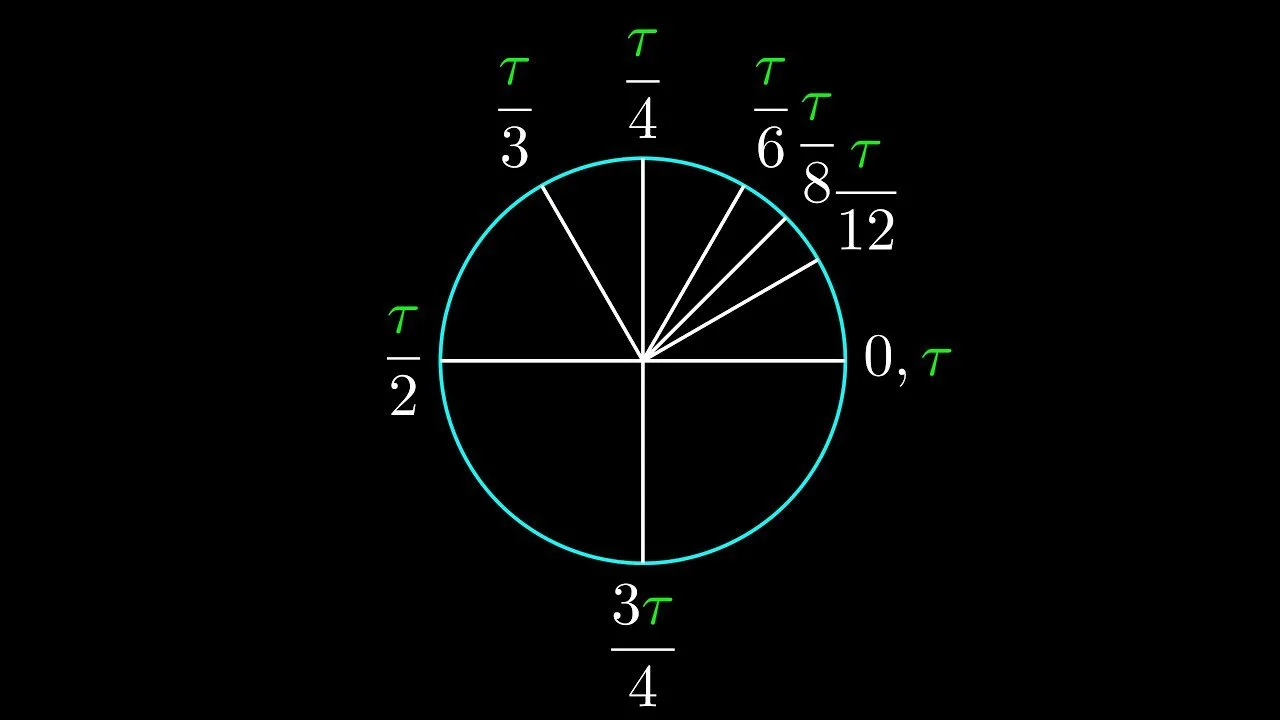
- Adoption of tau (τ ≈ 6.283185…) over π, eliminating extraneous factors of two and clarifying cyclic phenomena.
- Delivery: Micro-modules ("Zynx seconds") with explicit derivations and assessments.
**Distinctive Contribution**
By prioritizing tau, it streamlines intuition—making rotations, waves, and Euler identities feel organic rather than contrived. This ties directly to broader goals: quantum principles as models for civic entropy and truth-encoding.
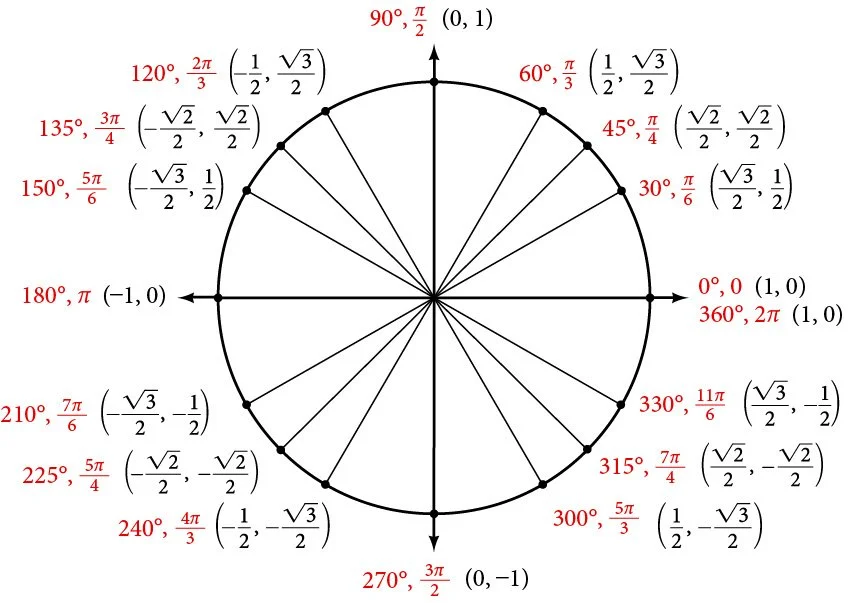
See the clarity gain: tau keeps fractions whole, pi forces halves—
Leap-Gras.com
**Overview**
A focused promotional site for the Quantum Leap Gras event—marking the February 29, 2028, launch of the ZYNX Universe.
**Mission**
To leverage the infrequent alignment of Leap Day and Mardi Gras as a symbolic and mnemonic catalyst for systemic education.
**Core Features**
- Temporal anchor: A convergence occurring roughly every 125 years.
- Thematic branding: Quantum-infused cultural celebration.
- Forward linkage: Directs users to primary Zinx resources.
**Distinctive Contribution**
It transforms a calendrical anomaly into a lived entry point—grounding abstract theory in communal, joyful experience.
Peer-Reviewed References:
- Palais, Robert. "π Is Wrong!" *The Mathematical Intelligencer*, vol. 23, no. 3, 2001, pp. 7–8. (Foundational critique of pi's pedagogical flaws.)
- Hartl, Michael. "The Tau Manifesto." 2010. Available at tauday.com/tau-manifesto. (Detailed case for tau in education, referencing Palais and extending to formulas like area = (1/2)τr².)
- Scientific American. "Why Tau Trumps Pi." June 25, 2014. (Highlights intuitive advantages for trigonometry and higher math.)
- York, S., & Orgill, M. (2019). "Applications of Systems Thinking in STEM Education." *Journal of Chemical Education*, 96(12). (Supports interdisciplinary approaches like Zynx's.)
Final Connection
Political polarization thrives on binary silos—echoing the "alternate domination" George Washington feared. By embedding tau's natural symmetry into learning, the ZYNX Universe dismantles these mental crutches: no more half-turns or forced factors. It equips citizens with triadic, systems-aware thinking—turning factional noise into shared clarity. In a divided era, that's not just math reform; it's democratic medicine.
The "Final Connection" draws a profound parallel between the seemingly innocuous mathematical convention of using π (pi) as the default circle constant and the deeper societal issue of political polarization. It argues that π's emphasis on semicircles and extraneous factors of two subtly reinforces fragmented, binary thinking—much like the "alternate domination" of factions that George Washington decried in his 1796 Farewell Address. By contrast, adopting τ (tau = 2π) restores wholeness and symmetry to geometric and trigonometric concepts, eliminating mental crutches that hinder intuitive understanding. This shift is not merely a technical reform; it symbolizes a broader liberation from cognitive silos. In this elaborated rewrite, we extend this analogy to illustrate how such embedded limitations in education perpetuate divisive mental frameworks, mirroring the binary factionalism critiqued in the Red Paper V6.1 ("The Leap Gras Directive") hosted at https://zynxsecs.org/redpaper. We then connect it to the Zynx Pedagogical Security System for Humanity, positioning the ZYNX Universe as a comprehensive antidote to these entrenched barriers, fostering triadic, systems-aware cognition essential for democratic resilience.
To begin, consider the cognitive implications of π versus τ in greater depth. In geometry and trigonometry, π defines the circle constant as the ratio of circumference to diameter, which prioritizes a linear measurement (diameter) over the more fundamental radial symmetry of the circle itself. This leads to pervasive inefficiencies: the area formula becomes πr², but only after an implicit halving (from the integral of circumference); angular measurements on the unit circle yield fractions like π/2 for a quarter turn, introducing an arbitrary "half" that obscures the circle's natural unity. Trigonometric functions, wave equations, and even Euler's identity (e^{iπ} = -1) require mental adjustments—adding +1 to complete the cycle or multiplying by 2 for full rotations. As the Tau Manifesto and related scholarly critiques highlight, this convention trains learners to compartmentalize concepts into halves and multiples, fostering rote memorization over holistic insight. Tau, by defining the constant as circumference over radius (τ ≈ 6.283185...), eliminates these artifacts: a full rotation is simply τ, a quarter turn is τ/4, and Euler's identity simplifies to e^{iτ} = 1, directly evoking completion without additives. This clarity extends to advanced applications, such as Fourier transforms and quantum mechanics, where periodic phenomena align intuitively with fractional cycles rather than halved approximations.
This mathematical fragmentation is no accident; it subtly conditions the mind to accept binary divisions as normative, much like the "zero-sum game" John Adams warned against in his 1780 letter, where a two-party system inevitably collapses cooperation into mutual defeat. In the Red Paper, this is framed through systems theory: the U.S. Constitution is likened to a multi-body gravitational system, where binary partisanship introduces chaotic "three-body problem" dynamics, pulling stable orbits (Executive, Legislative, Judicial) into unpredictable decay. Patrick Henry's 1788 warnings against centralized consolidation amplify this, foreseeing how factions weaponize federal power to crush local nuance, demanding an educated citizenry armed with "cognitive frameworks" rather than muskets. Similarly, Benjamin Franklin's quip—"A republic, if you can keep it"—underscores entropy from complacency and blind loyalty, while Thomas Jefferson's 1801 call for unity ("We are all Republicans, we are all Federalists") seeks to bridge semantic silos through autodidactic principles. Extending to the 20th century, FDR's advocacy for "bold, persistent experimentation," JFK's critique of "persistent myths," and RFK's condemnation of "false distinctions" reveal how information-age polarization amplifies these flaws, turning neighbors into enemies via institutional indifference. The Red Paper speculates that these "titans" would, in 2028, abandon ballot-box fixes for decentralized cognitive upgrades, architecting a system like the ZYNX Universe to rewrite the "software of the American mind."
Herein lies the bridge to the Zynx Pedagogical Security System for Humanity, as articulated in the Red Paper's arsenal for the 2028 Leap Gras launch. This system is not merely educational; it functions as a "cognitive firewall," merging Washingtonian prudence (deliberative reason as a damping mechanism), Henry's decentralized sovereignty (empowering local agency against federal overreach), Jeffersonian autodidacticism (shared principles over labels), and FDR's experimental ethos into an advanced, triadic logic framework. By embedding τ's symmetrical wholeness into its remodel of mathematics and physics—alongside ASCII-friendly notations for universal access—the ZYNX Universe dismantles binary mental crutches at their root. No longer do learners grapple with "half-turns" or forced factors; instead, they internalize dynamic ratios and cooperative equilibria, as per the Red Paper's game theory application, replacing zero-sum factionalism with balanced, three-branch governance models. In Louisiana's 2028 electoral crucible—amid Presidential, House, and Senate races—the system leverages cultural resilience (post-Katrina grit) to insulate communities from national gravitational pressures, training citizens in empathy (per RFK) and myth-piercing (per JFK) via interconnected humanities, civics, and STEM.
Ultimately, in an era where polarization thrives on fabricated limits—echoing the Red Paper's thesis that "limits are fabricated by mentality"—the Zynx Pedagogical Security System emerges as democratic medicine. It equips humanity with systems-aware thinking, transforming factional noise into shared clarity. Launching on Leap Gras 2028, the ZYNX Universe doesn't just reform math; it secures intellectual equity, fulfills the Founders' mandate to "keep the republic," and offers a scalable antidote to binary despotism, ensuring that cognitive sovereignty becomes the bulwark against entropy and division.
Elaboration on the Leap Gras Directive
The Leap Gras Directive, as detailed in the Red Paper V6.1 ("The Architecture of Intellectual Resilience: Synthesizing the Founders, the Vanguard, and Systems Theory for the 2028 ZYNX Universe"), represents a strategic blueprint for launching the ZYNX Universe on February 29, 2028—a date dubbed "Leap Gras" due to its rare convergence of Leap Day, Mardi Gras in Louisiana, and a major U.S. electoral conjunction (Presidential, House, and Senate Class III elections). Prepared by Google Gemini for Ainsley Becnel, founder of Zinx Technologies, the directive synthesizes historical U.S. statesmanship with systems theory to address contemporary political polarization and cognitive fragmentation. It positions the ZYNX ecosystem as a modern embodiment of "Prudence"—a deliberative, damping mechanism against binary factionalism, drawing from George Washington's 1796 Farewell Address warnings on the "spirit of party" substituting factional will for national consensus.
At its core, the directive frames the U.S. Constitution as a multi-body gravitational system susceptible to "three-body problem" chaos under binary partisanship, where extreme pulls disrupt institutional stability. It elaborates on Founders' diagnoses: John Adams' 1780 fear of zero-sum duopolies collapsing into non-cooperative equilibria; Benjamin Franklin's 1787 entropy warning ("A republic, if you can keep it"); Patrick Henry's 1788 Anti-Federalist critique of centralized power eroding local sovereignty, advocating for cognitively armed citizens; and Thomas Jefferson's 1801 linguistic bridge-building ("We are all Republicans, we are all Federalists") through autodidactic education. Extending to 20th-century vanguards, it incorporates FDR's 1932 call for "bold, persistent experimentation" in governance as science; JFK's alert to "persistent myths" shrinking leadership criteria to factional loyalty; and RFK's 1968 condemnation of institutional violence via "false distinctions," urging empathy over indifference.
Speculatively, the directive envisions these historical figures, confronting 2028's hyper-polarization, bypassing compromised electoral systems to prioritize decentralized cognitive upgrades—precisely what the ZYNX Universe delivers. The Zinx ecosystem serves as the counter-measure: Zinx Technologies as the architect of intellectual equity, interconnecting disciplines to shatter silos; Zynx Securities as the "cognitive firewall" securing truth via ASCII models; and the ZYNX Universe as the autodidactic engine teaching triadic logic and dynamic ratios for rejecting extremism.
Louisiana emerges as the testing crucible, leveraging its cultural resilience (post-Katrina) and 2028 electoral pressures to insulate local nuance from national division. The directive concludes with an ultimatum: fulfill the Founders' mandate through systems-thinking pedagogy, securing knowledge, abandoning myths, and reclaiming experimentation. Rooted in the premise "Limits are fabricated by mentality," it calls for collective action to "keep the republic," with references to primary sources like Washington's address and Zinx documentation.
Outline of Systems Theory in Education
Systems theory in education views schools, classrooms, and learning environments as interconnected, dynamic systems rather than isolated components, emphasizing relationships, feedback loops, and holistic interactions to improve outcomes. Originating from biology (e.g., Ludwig von Bertalanffy's general systems theory in the 1950s) and mechanics, it has evolved to influence educational reform by addressing complexity and intractability in school systems. Below is a structured outline based on peer-reviewed and scholarly sources, highlighting key concepts, historical development, applications, and challenges.
I. Core Concepts and Principles
Interdependence and Relationships: Components (e.g., teachers, students, policies) interact and influence each other; no element functions in isolation. For instance, a change in curriculum affects teacher training and student engagement.
Feedback Loops and Adaptability: Systems respond to internal and external inputs through feedback, enabling flexibility and adaptation to environmental changes (e.g., post-crisis resilience in schools).
Holistic Perspective: Focuses on the "whole" system rather than parts; changes in one area ripple across the ecosystem, explaining why isolated reforms often fail.
Entropy and Equilibrium: Systems are prone to disorder (entropy) without maintenance; education systems require ongoing inputs to sustain quality.
II. Historical Development
Origins (1950s-1960s): Emerged from biology (von Bertalanffy, 1951; Boulding, 1956) and cybernetics (Wiener, 1948; Ashby, 1954), shifting from linear to systemic models.
Application to Education (1970s-1980s): Influenced by developmental theories (e.g., Piaget, 1972; Bronfenbrenner, 1979) and organizational management, applied to understand school as "open systems" interacting with societal environments.
Modern Evolution (1990s-Present): Integrated into policy and reform (e.g., Senge, 1990 on learning organizations); used in STEM education to foster interdisciplinary thinking. Recent applications include early childhood education in Latin America, emphasizing systemic change over isolated policies.
III. Applications in Education
School Improvement and Leadership: Analyzes district central offices' roles in systemic reform, using social network analysis to map relationships and levers for change.
Teaching and Learning: Guides qualitative research on assessment and feedback in programs like intensive English, revealing how subsystems (e.g., teacher-student interactions) impact outcomes.
Policy and Reform: Identifies levers for quality (e.g., teacher engagement, student outcomes) in global contexts; addresses tensions between reform theory and reality.
STEM and Interdisciplinary Education: Promotes systems thinking to connect subjects, enhancing problem-solving and adaptability.
Intervention Design: Uses systems methods to anticipate hurdles in behavioral or health education programs, improving sustainability.
IV. Challenges and Criticisms
Complexity and Intractability: Systems are resistant to change due to entrenched interactions, leading to predictable reform failures (Sarason, 1990).
Roadblocks: Includes constraints like policy silos or environmental factors; requires adaptability to turn threats into opportunities.
Implementation Gaps: Theory often outpaces practice; needs empirical testing in diverse contexts (e.g., South African schools).
V. Future Directions
Integration with Technology and AI: Leveraging systems for personalized learning and data-driven feedback.
Global Equity: Applying in developing regions to build resilient education ecosystems.
This outline draws from sources emphasizing practical, evidence-based applications.
Overview of the ZYNX Universe
The ZYNX Universe, as conceptualized by Zinx Technologies (a non-profit co-founded by Ainsley Becnel and Edward Kleban in the aftermath of Hurricane Katrina in 2005), represents a transformative, civilization-grade learning architecture. It aims to dismantle siloed knowledge by fostering systems thinking, uncovering interconnected patterns across civics, humanities, mathematics, physics, and governance. Rooted in post-disaster resilience efforts in New Orleans, it frames learning as a "cosmic puzzle" experience, drawing inspiration from complex simulations like EVE Online. Set for an official launch on February 29, 2028—coinciding with the rare "Leap Gras" convergence of Leap Day and Mardi Gras in New Orleans—the ecosystem promotes intellectual equity and human advancement through modular, scalable platforms. Below, I'll elaborate on its core features, drawing from the foundational white paper and ecosystem documentation.
Core Philosophical Foundations
Zynx Theory: At the heart of the ZYNX Universe is Zynx Theory, a "first principles" remodel of physics and mathematics that adheres strictly to established science (as of 2026). It emphasizes pedagogical clarity by using ASCII-only, QWERTY-compatible notation to eliminate barriers like Greek symbols (e.g., hbar for ħ, sig for σ). Key innovations include:
Redefining the speed of light (c) as a ratio (c = 1/1, D/T = 1) to unify space-time and simplify E = m.
Conceptualizing gravity as "sphere expansion tension" from zero-point fluctuations.
Discrete "updates" for universe evolution, aligning with Quantum Field Theory (QFT) and Quantum Electrodynamics (QED) as extensions of quantum mechanics (QM).
Preference for tau (τ ≈ 6.28) over π for cyclic phenomena, reducing factors of 2 in formulas (e.g., angular frequency w = τ * f; wave number k = τ / λ). This enhances intuition in trigonometry, modular forms, and periodic functions, shifting from rote memorization to conceptual grasp.
Optimized QM formulas for accessibility: e.g., energy e = hbar * w; uncertainty sig_x * sig_p >= hbar / 2; state evolution |psi(t)> = exp(-i H t / hbar) |psi(0)>.
Cosmological applications: Black hole equations like r_s = 2 * G * m / c^2; area A = τ * r_s^2; entropy S = k_B * A / (4 * l_p^2); Hawking temperature T_H = hbar * c^3 / (8 * τ * G * m * k_B).
Extensions to quantum information: Bell states (1/sqrt(2))(|00> + |11>); Hadamard gate (1/sqrt(2)) [[1,1],[1,-1]]; applications in error-corrected computing and entropy (rho = |psi><psi|, S = -tr(rho * log rho)).
Systems Thinking Integration: Learning is treated as an interconnected web, merging QFT fields with civics (e.g., entropy in social systems) to build interdisciplinary problem-solving skills. This draws from post-Katrina adaptability, emphasizing resilience and human-centered design.
Stacked Platforms: The Modular Ecosystem
The ZYNX Universe comprises four interconnected platforms, each optimized for online, interdisciplinary learning. These ensure coherence, scalability, and innovation, with annual updates to incorporate QM and cosmological advancements.
Unique Aspects and Impact
Digital Accessibility and Equity: All formulas are in plain ASCII (e.g., E = q / (2 * τ * eps0 * r^2) for electric fields), enabling seamless use in code, forums, AI environments, and plain-text communications. This draws from quantum libraries like QuTiP and the Tau Manifesto, standardizing data for interoperability in programming, simulations, and global education—removing barriers for underserved learners.
Interdisciplinary Ties and Resilience: Merges STEM with civics (e.g., quantum entropy analogs in social systems) and humanities, rooted in Katrina-era recovery for building adaptability. It empowers "systems thinkers" to correct misinformed principles, viewing education as a "mental security" system against misinformation.
Security and Evolution: Zynx Securities acts as the "cognitive firewall," managing annual updates and safeguarding against persistent myths (per JFK's warnings). The ecosystem evolves through partnerships with educators, institutions, sponsors, and learners, with beta testing and pilots encouraged.
Call to Action and Launch: The 2028 Leap Gras launch serves as a cultural mnemonic, blending New Orleans' vibrancy with temporal rarity (Leap Day-Mardi Gras alignment every ~125 years). It invites global collaboration via contact@zinxtech.com, with resources at ZinxTech.com, Zynx.online, and ZynxSecs.org.